
I'm a Sikh with Depression

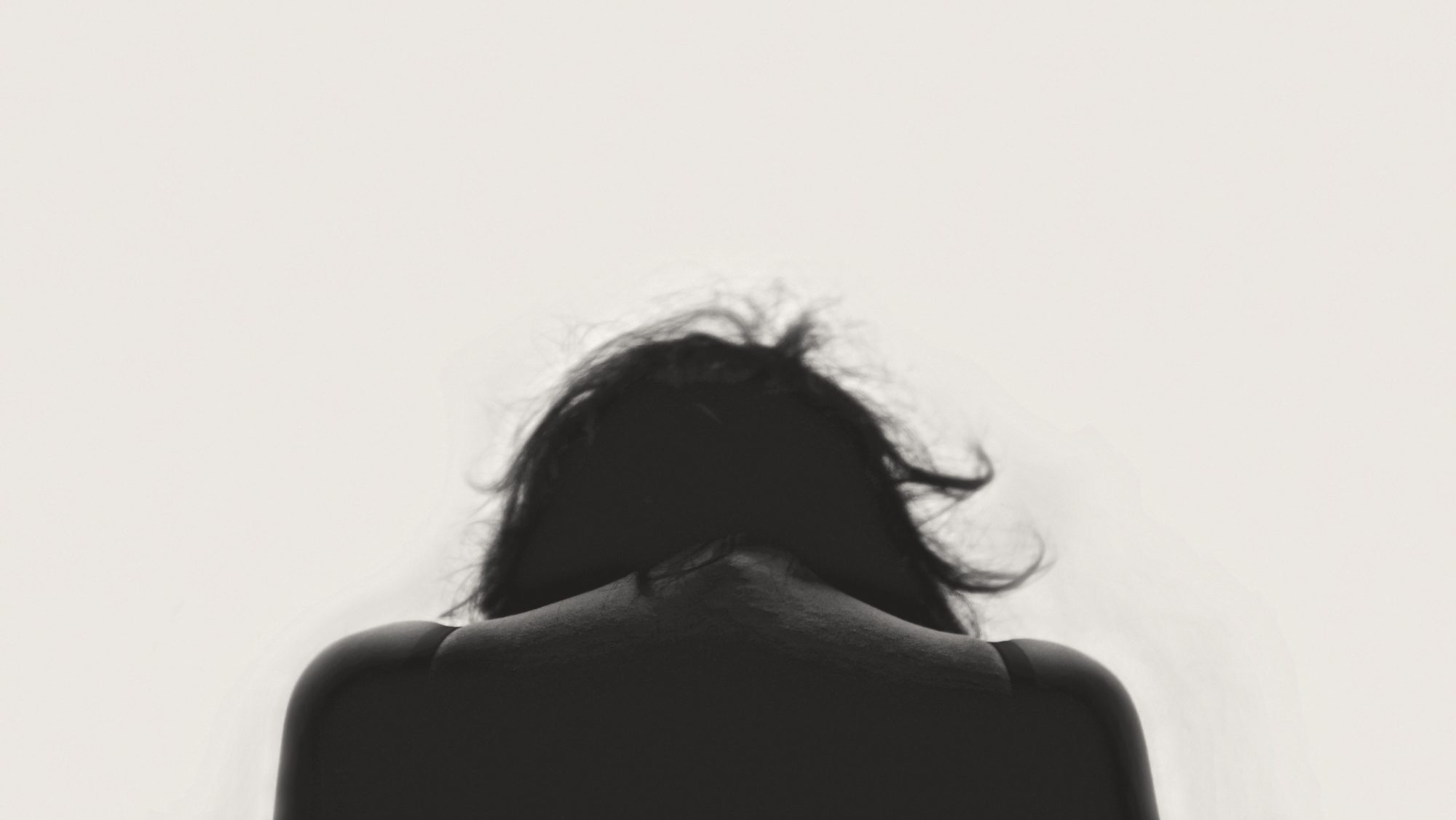


By Kaur
I write this with the hope that it will help others who are struggling with depression.
“Do you know how Punjabis cure depression?”
Holding up a shoe, “You beat it out of them!”
*Laughter*
I grew up in an environment where depression was chalked up to Western fabrication, a result of self-centered neurosis that Americans had artificially created as an excuse for prescribed “uppers” (ie: anti-depressants). The above “joke” was one I heard a few times in my family. I remember my mother once saying, “Depression and the ‘woe is me’ attitude happens when you don’t have real problems, like starvation or homelessness. So, you end up manufacturing problems just to feel sorry for yourself. You don’t see Punjabis with depression because they are focused on work and putting food on the table.”
Due to this family environment, in about 8th grade I thought that my despondent demeanor was my own fault. “You need to fix your bad attitude,” my mother said. “Are you happy?” My dad asked me quite regularly. I could never answer “yes” with complete honesty and conviction. I was told that with enough will power and discipline, I could will myself to be happy.
Once, at a bookstore my dad said, “If you’re not happy, go look at the self help section.” But, I couldn’t tell if he was being sarcastic or giving me genuine advice. I glanced over at the section and quickly dismissed the idea thinking, “That’s for losers and crazy people.”
“Why should I look there?” I thought. “I have nothing to be unhappy about. My parents are loving and supportive. My siblings are fun. I am doing excellent in school and have great grades. I am a nice person.” But, like every person’s life, there were negative aspects to mine too. For instance, I was never fully accepted by my classmates and at times, was bullied. The opposing pull of American and Punjabi values, the friction between Sikhi and WASP (White Anglo-Saxon Protestant) culture, and the conflict between what my parents expected and what society wanted and what I wanted all mixed up in my mind and left me in a suspended state of anxiety.
I would write journal entries trying to convince myself that the strict path my parents had me on was the right path for me. Being eager to please my parents and be a “good” Sikh, I followed their wishes for me and it resulted, in my opinion, a 50% “success”. The “success” included: being at the top of my high school class, being first clarinet in band, being bound for one the best colleges in the nation, knowing a lot of kirtan and Sikh history, and having a strong and close relationship with my parents and siblings. The “failure” included: having no close friends, feelings of loneliness, thinking I was a loser, believing I was a social failure, body dysmorphia, and being constantly sad.
“Everything about me is wrong,” I thought. “My hair, my clothes, my body, my personality, and the way I interact with people are all lame. No wonder I have no friends.” I had a mindset of fatalism, “Nothing I do matters. In the big picture, what’s the point?” I also felt like my time with my family was running out, “I have to make the most of the time I have with my family! I’m going to college soon and then I’ll be married and it will never be the same again!”
I don’t blame my parents for my dark mindset. They did the best they could and cared for me from a place of love. They were trying to steep me in Sikhi while trying to allow me to be American at the same time. “It was a tricky balancing act,” my dad recalled. “I don’t know if we did it right.”
During middle school and high school, my parents and I chalked up these sad, gloomy feelings of mine to “teenage angst” or a “bad attitude phase” that I would eventually grow out of. But, I never did, and it wasn’t a “just a phase.”
6 years after high school, I was clinically diagnosed with severe depression and anxiety.
Over those six years, my sadness and despair had escalated to the point where I could not get through the day without crying. I remember walking to my room and collapsing on the stairs in uncontrollable sobs, for no reason. It felt like I could never stop crying. A poem I read by a girl named Hayley sums up how I felt:
“The thick, black cloud overcomes her,
Smothering her till she suffocates.
She gasps, while inside her,
Everything is torn apart,
Her heart ripped to shreds,
And repeatedly stabbed,
With a rusty dagger.”
Nothing brought me joy anymore. I blamed myself for not finding joy in my hobbies and I started to “should” myself: “I should be happy! I should like practicing clarinet! I should smile more!” But this type of thinking made me feel guilty and exacerbated my depression.
My depression peaked during my wedding planning when I was caught in the middle of the diverse expectations of my family and my fiancé’s family and, between what I wanted and what my fiancé wanted. I felt like I wasn’t good enough. I felt like regardless of what I did, someone would be mad at me and my life would be ruined.
One day, my dad and I went for a walk and an airplane flew overhead. “Anytime I hear that, it triggers in me a feeling of hopelessness and despair,” I told him. It was at that point that my dad took me seriously. “Maybe you have a little bit of dysthymia (a mild, chronic form of depression). You should get that checked out,” he suggested. Growing up, I didn’t realize that though my parents joked about depression, they actually believed that some people really do have depression and it should be seriously addressed. If I had known their true beliefs regarding mental health earlier and they hadn’t stigmatized it, perhaps I would have sought help sooner.
Initially, I refused to seek psychological help. I felt like I would be “giving up,” and admitting defeat. I thought that I could beat it myself and asking for help was a weakness. I thought people would think I was “crazy.”
Reluctantly, with my parents love, support and encouragement, at 24 years old, I went to a psychologist and was officially diagnosed. Before that point, I did not know I was suffering from depression and anxiety. I felt utterly helpless.
My therapist used cognitive behavioral therapy, a technique that examines the relationships between thoughts, feelings, and behaviors. Through therapy I learned many things that helped me heal.
- I learned that my past experiences of cultural conflict and social rejection shaped my world-view to be primarily negative and caused a downward spiral of self-hate thinking.
- I learned that I didn’t have an attitude problem (like I initially thought) but a schema (organized pattern of thoughts/behaviors that organize categories of information and the relationships among them) that needed to be changed.
- I learned that my mood and thinking was also the result of neural pathways in my brain that had developed over years and the low levels of serotonin in my neural synapsis.
- I learned that the “self-help section” is not for crazy people, but for those who want to improve themselves.
- I learned that depression is a medical illness and runs in families.
- I learned that the taboo and stigma around mental illness is prevalent in American and South Asian culture.
- I learned that the dismissive attitude of depression as a medical illness was a common problem in society.
It has been four years now since I have been talking to a therapist, taking anti-depression medication, and doing mental exercises and workbooks to improve my self-esteem. I am so happy I asked for and accepted help because I feel so much better now.
I have also been leaning on Sikhi to help me fight depression.
Seva: Community service and volunteering has helped me fight depression because it got me to interact with people and increased my social contact. It got me out of my own head and to focus on helping others so, I felt my actions were valued. When engaged in seva, I feel closer to the Sikh path and I feel like I am doing something good and needed.
Simran: Meditating was something that my therapist and dad suggested I incorporate into my day. It helps me stay in the present moment and I to try and let go of the past and regrets and not focus on anxieties of the future.
Gurbani vichar: As I started reading more Gurbani, I felt like the Guru was writing to me and to my condition. I read some shabads that said I should raise myself esteem to understand that I can merge with divine and that through seva and simran, I can attain peace and value. Other shabads describe pain and longing that I feel when depressed; a condition that can be alleviated by following Guru Sahib’s teachings and doing seva. Reading gurbani comforts me because it captures my experience and it provides me with answers.
The biggest help in my life has been my husband. He has been a kind, patient, and understanding teammate. He hugs me when I cry, tries to rationalize my irrational thoughts, and he doesn’t get angry or frustrated with me. I feel so indebted to him for his unconditional love and support.
This is the first time I have written publicly about my depression and anxiety. I have been hesitant to talk about it and share it with my friends and family because I am afraid they will stop spending time with me. I don’t want people to think, “She’s crazy! Let’s not be friends with her,” or “She’s smiling and happy today, is she faking it? Is it her medication?” I also don’t want them to think my skills or competency is compromised by my illness.
But, at the same time I realize that we cannot break the silence and stigma around mental health without bringing attention to it, talking about it, and personalizing it. So, this is my attempt to help others.
Slowly, as I open up to my parents, close friends, and family about what I am feeling, I have started to feel more free and liberated. It feels good to be myself and share my challenges and triumphs with those who care about me.
I am not 100% healed yet, but I am getting there and unlike in the past (where I felt hopeless) I truly hope and believe that I will be happier than I have ever been as this journey continues.
- Title
- I'm a Sikh with Depression
- Subject
- en Mental Health
- Description
- A Kaur writes about her struggles with depression and reflects on her journey to accept her depression, getting help, and building the tools to improve her mental health.
- Author
- Anonymous
- Date
- 6/16/2015
- Comments
-
M Kaur on June 16, 2015 at 5:44 PM
Thank you for your strength and sharing how the happiest of times may be clouded and give no happiness when we aren't well--mentally or physically. I have a strong sense many of your family and friends would give you a big hug and open their own heart stories if you did speak with them--so, as you carefully figure it out, hope you can be yourself and share yourself comfortably with more people. And in the meantime, be cocooned by your husband--good for him for being such a rock. Much less than stopping spending time with you, one wants to hug you big! Guru Ang Sang Sahaii.
Angela kaur on June 16, 2015 at 7:22 PM
Thank you for this honest and open article. Unfortunately this is a common problem that rarely is discussed in a practical way.
Would you please reference the shabads that you have particularly identified with?
Wish you well.
Kaur Life on June 16, 2015 at 7:33 PM
You can click on the word "shabads" in pink in the article and they will take you the shabads the author referenced.
M Kaur on June 16, 2015 at 9:08 PM
Thank you for sharing your most personal experience. It helps me in so many ways to help my daughter who was recently diagnosed with D&A. You just gave me much needed 'hope'. Akaal Sahaee!
Dharamjot on June 17, 2015 at 10:17 AM
thankyou for sharing your personal journey. You are so brave and courageous.
Yes depression can affect anyone even punjabis.
What a blessing you have found the support you need.
Canadian Kaur on June 17, 2015 at 1:30 PM
Thank you for posting this! Our culture/religion really needs to be educated on this matter. I am a 37 year old sikh women who has been suffering with depressions since 13. I did not realize what it was until 13 years later when I was diagnosed by a doctor who advised me I had severe depression. My mom and family thought it was just me being a spoiled brat because I was the youngest. I would sleep for days, I had no energy to function on a daily basis, I was called lazy. I thought I was lazy too because thats what everyone told me. It wasn't until I was 31 and ended up in a hospital because I couldn't feed myself or get out of bed for over a week that my family, my mother finally accepted that I needed to go on meds. Before this time, I was not allowed to be on them. Had my family and mother understood this disease I wouldn't have spent 20 years of my life suffering, and crying and not being able to function as a normal human. I started my medication 5 years ago, and my life has been amazing. The thoughts are so clear, to feel joy and happiness and feel positive finally without the haunting negative thoughts. I used the medication to get back on my feet, and I am slowly being tapered off of them as I have made major life style changes. I may need to continue with them for the rest of my life at this point I am just happy to be able to function as a normal human being should function. Get help, get educated, and make the necessary changes you need to so you can combat this disease. It is totally doable. I thought i would never see the light at the end of the tunnel or be able to dig myself out of a deep hole, trust me you will see the light and you can dig yourself out of the deep hole. Love to everyone
Kaur on June 18, 2015 at 6:28 AM
Thank you. .
I was also suffering from dysthymia for many years.
since I took this spiritual journey and concentrated on Our Guru Grant Sahib Ji
my world I'd a completely different place.
I did not even wean myself off the medication (which your suppose to) I just come off it full stop and it's been 8 months and I never looked back.
The truth is there is no better medicine than naam jaap and meditation.
which all eventually starts to make sense.
Like your good self my husband has been my rock.
You find many family members don't understand and don't want to know.
I'm happy for you.
I can totally relate to you after reading your article.
Vaheguru is always there for you x
S. Singh on June 23, 2015 at 11:35 AM
I thank you for writing this article. Your story gives me hope.
I have been looking for ways to get help as I have had times when I feel I cannot get out of bed. I started seeing a psychiatrist and that helped but I wasn't consistent with seeing him because he cost too much money. I feel at times that I do not want to be a burden on anyone so I cut off communication to those few people in my life. I try to have faith that I can get better and live a positive productive life. At this point I feel like giving up on myself yet a small part of me wants to get help. My parents don't understand as they say just "snap out of it and do something." This is a challenge for me to write. Every few months I cannot get out of bed and just cry. As I do this I talk to God asking for help. At this point I am not sure how I can overcome this and I feel alone. I am asking the people who have commented on this and the extraordinary woman who wrote this to reach out to me at phantomx69@excite.com.
Singh on June 25, 2015 at 4:27 PM
Thank you for sharing your story with us. One of my best friend's sisters recently committed suicide due to depression and it caught all of us off guard. We definitely need more people in our community to talk openly about their experiences so that we can start to get rid of the stigma surrounding depression. I'll be sure to share your story with family and friends and was considering speaking on the subject of depression at our gurdwara. Have a wonderful and blessed life.
Sikh Warrior Light on November 21, 2015 at 3:55 PM
Thank you for the very honest account.
I have written a post on depression in my blog. I have recovered now with Guruji's grace. All it takes is hope and newfound faith :)
Form on March 28, 2016 at 2:11 PM
I have replied to you.
H k on August 6, 2016 at 8:24 AM
Thank you
- Item sets
- Lifestyle