
Does Guru Granth Sahib Describe Depression?
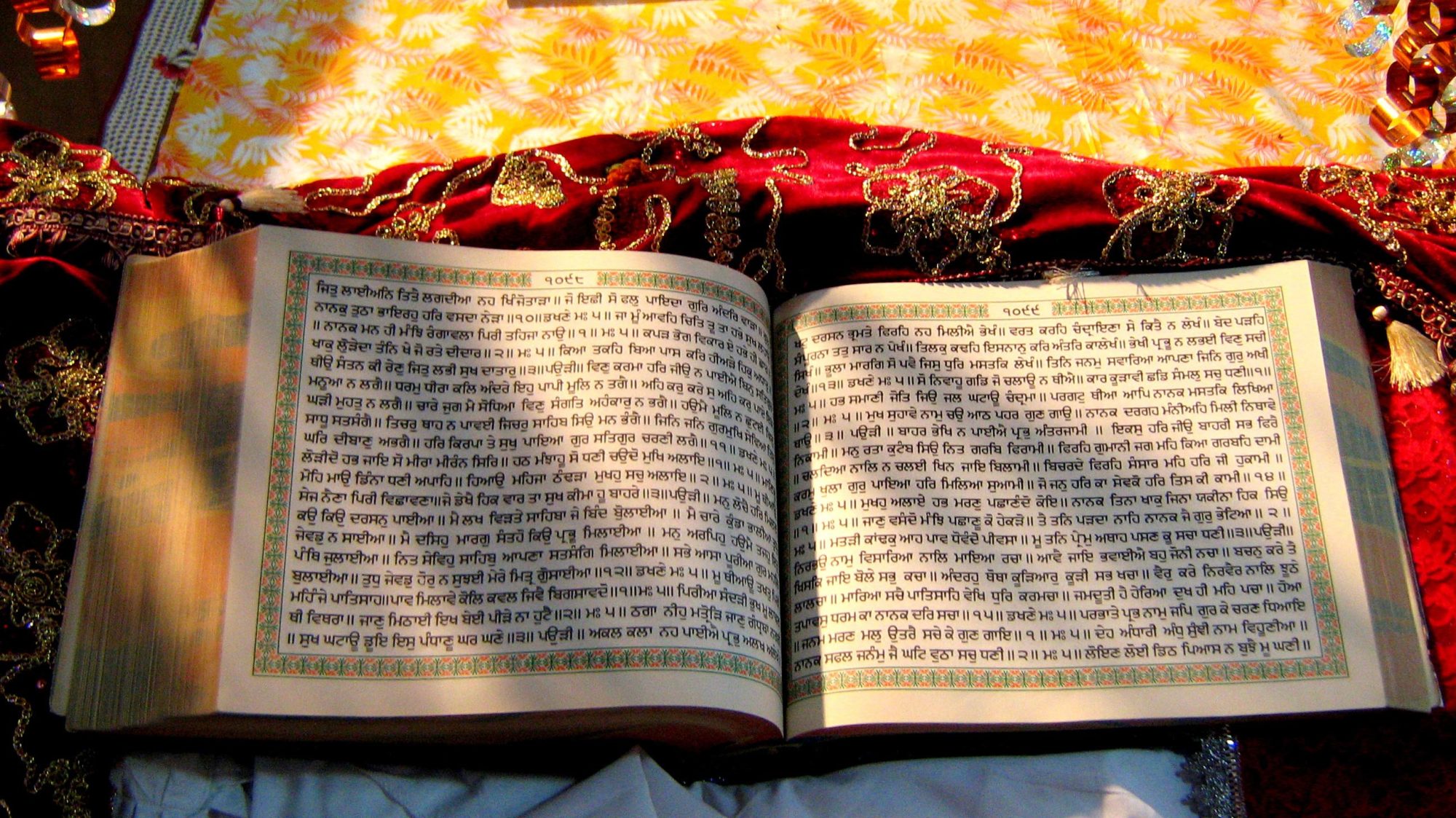
While depression and mental health is more commonly and openly discussed today than in the past, it doesn't mean people weren't afflicted by it. Here, we explore the paper, Does Guru Granth Sahib Describe Depression (2013) by Gulvinder Kalra, Kamaldeep Bhui, and Dinesh Bhugra, who argue that Guru Granth Sahib very clearly addresses depression: its causes, symptoms, and healing methods.
In 1699, Guru Gobind Singh Sahib Ji passed the Gurghadi (Guruship) onto Guru Granth Sahib and Guru Khalsa Panth. In doing so, we Sikhs now reference the Guru Granth Sahib as our spiritual guide and look to the Guru Khalsa Panth as our temporal guide.
In this light, many Sikhs may turn to the two guiding entities for help when facing depression or other mental illness. For instance, the Guru Granth Sahib can be referenced for solace and spiritual guidance. In tandem, drawing on the Guru Khalsa Panth can include seeking help from others, being in sangat, singing kirtan, doing seva, building community, and developing social resilience. All of which are helpful tactics in fighting depression.
In the paper, Does Guru Granth Sahib Describe Depression (2013) by Gulvinder Kalra, Kamaldeep Bhui, and Dinesh Bhugra, the authors argue that Guru Granth Sahib very clearly addresses depression: its causes, symptoms, and healing methods.
“The Sikh holy scripture explicitly discusses sadness and depression (dukh) using many metaphors… we elaborate on the phenomenology of depression as understood in modern terminology that has been described in the Guru Granth Sahib,” they write.
The authors find that negative paradigms that many people experience when depressed are highlight by the Gurus. “The text also mentions that the afflicted mind (muhnbhulo) may harbor negative thoughts (vikar)… The negative outlook of the depressive is evident [on Ang 610] which states that the sick person perceives everyone else as sick, while to the happy person, everyone else seems happy, and also that for the depressed, colors may appear faded and washed away.”
Furthermore, other symptoms and behavioral changes that are currently associated with depression by today’s medical professionals are also described in the Guru’s writings the authors conclude. “Weeping (rona) and loss of sleep (neend) and appetite have been mentioned as symptoms of sadness seen after the person is separated from the Lord , as is heaviness on the head (sir aavey bhaar). The tongue is said to lose all tastes in the absence of the name of the Lord; all tastes (saad) are perceived as insipid and bland (fika). In the absence of the Lord, one becomes dukhi, so it can be interpreted that loss of taste is mentioned as a symptom of dukh. The afflicted person may also have poor selfcare and may be dressed in filthy cloths (mailey veis). A reference to hopelessness as a symptom probably is reflected in the following line: In front of me, I see the jungle burning; behind me, I see green plants sprouting."
The authors then go to point that the Gurus wrote about the therapeutic effect of naam japna (meditation/simran). It is interesting to note that in a culture and society which is dismissive of depression and stigmatizes it, the Gurus found it necessary to address it as they presumably saw it afflicting a lot of people.
“The text enumerates many ways of praying (pujaa, bhagti) the Lord, some of which include: Ardaas (prayer), shabad and kirtan (holy songs), naam jaap (chanting the Name), oostuht (praise the Lord), listening to saakhi (Guru's teachings), gurbani (Guru's words), and upadeis (teachings). It notes that grief gets resolved by coming to the sanctuary of the parbrahma (sanctuary here may refer to any holy place). For a more long-term control and management of depression, the text recommends remembering (simran) and praising the Lord and staying in his sanctuary (raam ki saran).”
We all know that remembering Waheguru is essential to our physical, mental, emotional and spiritual health, but what does it actually mean? How does one do that?
Our question to you all is, “What does it mean to ‘live in remembrance of Waheguru?’" or to "Stay in Waheguru's sanctuary? ” and "What does it include and how does it manifest in one’s everyday life?"
Photo source: saddahaq (website no longer active as of May 2026)
- Title
- Does Guru Granth Sahib Describe Depression?
- Subject
- en Mental Health
- en Guru Granth Sahib
- en Gurus
- en Lakhpreet Kaur
- See all items with this valueMental health--Religious aspects
- See all items with this valueSikh hymns
- Description
- In the new year, the Kaur Life Board reflects on the first year of Kaur Life's existence.
- Author
- Lakhpreet Kaur
- Date
- 6/24/2015
- Comments
-
CharanS on July 9, 2015 at 11:33 AM
Sangat Jio !!
Yesterday I saw this video
https://www.youtube.com/watch?v=DloTO-SwFZA&list=PLsRNoUx8w3rN6_4wJsEdAuasodNUUhO31&index=6
Reading your thoughts on this thread today was some dots connected to this watched youtube link !
My question while watching it was how to demystifying the experience shared in the video, looked for some kind of objective measurement and it was similar to what you have asked also "how does it ( Waheguru JiO) manifest in one’s everyday life?”
So my answer after reading your wonderful article is : When in remembrance, sanctuary of Waheguru JiO - Great Guroo blesses and provides a continuity ( with connecting of dots from nowhere to everywhere gets established) in
1) Learning ( what is Sikhi and its clearly laid objective for every Sikh of Guroo)
(2) Love ( PraeM-Preet) and
(3) Liv ( Liv - Sachi Livae Bin Deh NiMaaNnee)
When in this continuity, manifested through easily connectable dots, strengthening of faith and fellowship prevails with no room for depression, anxiety, lack of accomplishments, misery, and sickness.
I would suggest adding Khoj(Research ) in your list - Khojat Khojat Tath Bicharo , Vichar( Reflections leading to meaningful insight)
"Ardaas (prayer), shabadandkirtan (holy songs), naamjaap (chanting the Name), oostuht (praise the Lord), listening to saakhi (Guru’s teachings), gurbani (Guru’s words), and upadeis (teachings)"
jS Sidhu on August 5, 2015 at 11:06 PM
Salok Mahala 9 - is describing worst situation and how one is empowered by God to accept an overcome all difficulties.
- Item sets
- Lifestyle