
Her Chunni, Her Brand
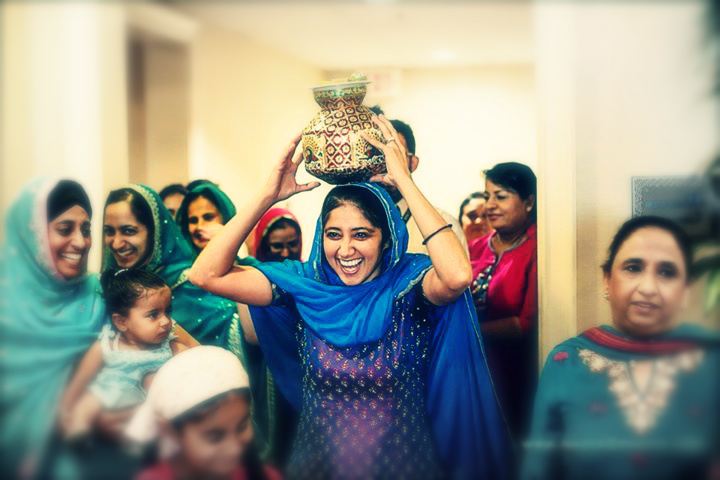
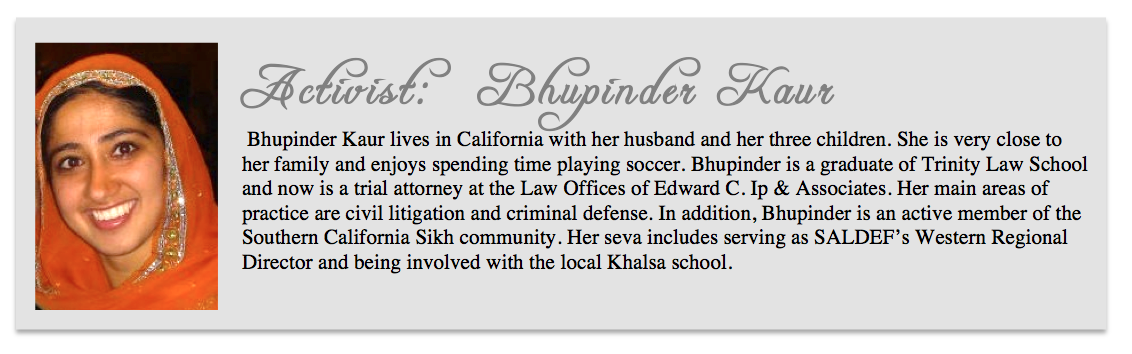
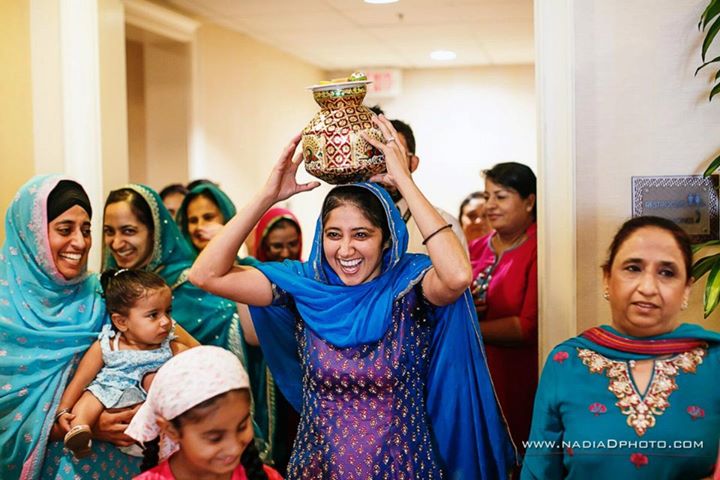
A bright, spunky, bold, and fun woman, Bhupinder “Bhupy” Kaur, mother of three, is a trial attorney who specializes in construction law civil litigation.
What makes her stand out from other lawyers is that as an Amritdhari Kaur, she always keeps her head covered with a chunni. Whether meeting with a client, arguing a case in court, or meeting with her kids’ teachers, she dons the chunni. Whether wearing western clothes or Punjabi clothes, she dons the chunni.
Born in England and raised in Vernon, Canada, she currently lives in LA, California.
It is so unusual to see a young Sikh woman covering her head with a chunni in the United States that Kaur Life decided to learn more about Bhupinder’s journey with Sikhi to understand what prompted her to wear the chunni at all times.
When did you start covering your head?
Bhupinder Kaur: I was 12 when I wanted to take Amrit. My parents said I was too young, but they agreed. So, we went to Vancouver for the Sanchar and I took Amrit there. I thought, “Hey, now that I’m Amritdhari, I should cover my head.” I started doing so with a ramal.
I never questioned it. I just thought, “That’s how it was supposed to be.” Growing up, my mother covered her head with a chunni.
How did you integrate that into your high school life?
Bhupinder Kaur: I started with a plain blue ramal and a plain black one. Then, I started wearing bandanas but I wanted more colors. By 12th grade my mom had dyed me 200 different colors so I could match them to my outfits!
At the time, I was really into watching WWF wrestling, so I would use puffy paint to design my ramals to support my favorite wrestler. It was fun!
Did your family influence your decision to cover your head?
Bhupinder Kaur: My mom covered her head all the time with a chunni. But she never pressured me to cover my head. I remember when we would go to parties and sometimes I’d wear a lengha and she would say, “You don’t have to wear a chunni at the party. You don’t have to wear it if you don’t feel like it.” But I wanted to and she would have special chunnis made for me.
The only time we had to cover our heads in our family was when we were cooking, eating, or in the Baba Ji’s room.
I never associated my dad or my brothers wearing a dastar to me wearing a ramal.
Did you ever consider wearing a dastar?
Bhupinder Kaur: I did. I was at a kirtan program once, at the age of 14, and someone said I couldn’t do kirtan because I didn’t wear a dastar. It was that comment that made me not want to wear one. I thought, “I can do kirtan. I can still be a Sikh even if I don’t wear a dastar!” It was a rebellious thing. I’ve never thought about it after that.
When did you switch from a ramal to a chunni?
Bhupinder Kaur: Even in law school I wore a ramal but I started to dislike the look. I felt like it looked to “kiddish” and not very formal. Wearing a bandana to a law internship wasn’t very professional and I didn’t want to wear plain ramals. Plus, I wanted a greater range of colors and prints so, I switched to a chunni.
I still wear a bandana sometimes while playing sports.
What have other Sikhs’ reaction been to you always wearing a chuni?
Bhupinder Kaur: In Vancouver, no one questioned why I wore it. They knew I was Amritdhari.
In Punjab, they didn’t get it. They knew why I wore it but they don’t understand why I would choose to. “Do you believe in a sant?” some people would ask me.
In the US, Sikhs come up to me and ask me, “Why are you covering your head? Why are you wearing a chunni?” This surprised me at first, the fact that Sikhs were asking me. I had to explain, Sikhs need to keep their kesh clean, boys do it, it’s an identity thing. Spiritually, it makes me feel closer to my Guru. It’s like a uniform. When I cross the line into the Guru’s Darbar, I don’t have to think twice about covering my head, because it is always covered.
I don’t get it when a Sikh tells me, “There’s no need to cover your head.” That’s rude. It’s not their decision and it’s violating my personal space. I respond to that by saying, “There’s no need for me to wear this shirt either, but I choose to.” I don’t know why it would bug them. It’s a personal choice. I’m not telling them they should all wear chunnis. The chunni is a part of me.
How did non-Sikhs react to your chunni?
Bhupinder Kaur: In Vancouver, everyone knew I was a Sikh. Canada’s multicultural education is awesome. In Vancouver, Non-Sikhs knew that I covered my head and didn’t cut my hair because I was Amritdhari. Very few people asked me questions because there were so many Punjabis around. Once in a while people would ask me, “That’s a cool print. Is it for fashion or something else?”
In the US, I am constantly mistaken for a Muslim. When I first got here I thought, “What the hell?!”
Even Muslims think I’m Muslim! They greet me with “As-Salâm Alaikum.” I reply, “Wa-laikum as-Salâm but, I’m not a Muslim, I’m a Sikh.” Then they ask, “Oh. So, why do you cover your head?”
Only once did a Muslim know I was a Sikh and that’s because he was from Pakistan and saw my Kara.
When other ethnicities say, “I like your scarf.” I say, “Thanks. I cover my head because I’m a Sikh.”
Did covering your head connect you to Sikhi or the Guru?
Bhupinder Kaur: As I got older, it did help me connect to the Guru and my Sikhi. When you realize you are different and you embrace that difference, it makes you a stronger person; you don’t end up changing your beliefs and morals based on your community. People have to accept you for who you are. You assert, “This is who I am, you need to accept me. I accept you and we can live together.”
It’s not about fitting in; it’s about accepting each other and doing stuff together.
Covering my head instilled confidence in me. I felt, “I can do anything.”
The chunni became my identity. My style. I became known for it and recognized by it. As my husband Amarpreet says, I can’t get lost in a crowd, he can spot me anywhere because he just looks for my chunni!
Photo by Nadia D.
- Title
- Her Chunni, Her Brand
- Subject
- en Bhupinder Kaur
- en Chunni
- en Identity
- en Kes
- See all items with this valueHair--Religious aspects--Sikhism
- Description
- Kaur Life interviews Bhupinder "Bhupy" Kaur to learn about her journey with Sikhi and understand what prompted her to wear the chunni at all times.
- Author
- Kaur Life Board
- Date
- 9/16/2014
- Comments
-
Simerjit Singh on September 17, 2014 at 11:23 AM
Bhenji awesome, people like you who understand hukam acts as a spiritual inspirational source for us.
anon on September 18, 2014 at 9:51 PM
Is there any way to email Bhupinder Kaur?
Kaur Life on September 18, 2014 at 9:56 PM
Gur Fateh, I'll pass your email on to her.
Ravindrapal Singh on September 18, 2014 at 10:23 PM
Good and inspiring article! Bhenji you are an inspiration to all of us around.
One thing I just thought to share: Don't worry about others stopping you to do Kirtan for not wearing a Dastar. If you think it’s good and make you feel near to Guruji, have it and inspire others too.
Vasilis on September 19, 2014 at 11:08 PM
Bhupy is one of the most amazing people I have had the honour of meeting! She is real and what is awesome is that she accepts everyone regardless of racial, religious, or ethnic background! We love you Bhupy Kaur!
Bhupy on September 24, 2014 at 10:32 PM
Dear all,
Sorry for the delayed response. I am not a social media person! Thanks for all your support and kind words. I truly am flattered. Who I am is a direct product of my sangat (community). I am and will always be confident in who I am because my family/friends/co workers have all played a role in nurturing my confidence by giving me support and above all acceptance, each in their own way. Vasilis, you are too kind and it's a pleasure to have you as a part of my life.
Prabhsimran Singh on January 25, 2015 at 2:11 PM
Waheguru ji ki fateh,
With all due respect pahn ji, this das thinks you may have taken it a bit too personally the kirtan thing, guru gobind Singh in his 52 hukams said to keep the religious discipline strictly, the group whom objected to your non dastaar, are just strictly adhering to their rehat in guru sadh sangat darbar, they believe keski as one of panj kakkar, They didn't say you can't to kirtan at all, but in front of guru roop sadh sangat they wanted guru roop kirtan, their guru wears dastaar as with all previous gurus. It's like how some people would not eat from a gursikh who wasn't wearing their kirpan, this is rehet for them, and where they draw the line, singing the lords praise is a great blessing for anyone from any background but if you want the highest status of singing those praises in the company of the guru sadh sangat, sometimes you got to humble yourself to their bachan, sorry if anything said offends, just trying to show the other point of view in this,
- Item sets
- Bana & Saroop